

Within the scope of the 2026–2027 Academic Year, an informational meeting was held in the Department of International Trade and Logistics to enhance quality assurance in education and raise awar...
Cirriculum and Course Contents
Course Plan and Course Descriptions
The semester-based course plan of the International Trade and Logistics Undergraduate Programme, along with the course descriptions and learning outcomes for the compulsory and elective courses, is presented below.
Abbreviations: T: Theoretical, P: Practical, C: Credit, ECTS: European Credit Transfer System
Course Plan
The course plan indicates the course code, course name, theoretical and practical course hours, local credit, and ECTS information by year and semester.
| YEAR 1 | |||||
|---|---|---|---|---|---|
| SEMESTER 1 | |||||
| Course Code | Course Name | T | P | C | ECTS |
| UTL 101 | Introduction to Business | 3 | 0 | 3 | 6 |
| UTL 103 | Introduction to Economics I | 3 | 0 | 3 | 5 |
| GS 113 | Computer | 2 | 2 | 3 | 5 |
| MAT 121 | Business Mathematics | 3 | 0 | 3 | 5 |
| ING 111 | General English I | 2 | 0 | 2 | 2 |
| TKL 111 | Turkish Language I | 2 | 0 | 2 | 2 |
| YTO 111 | Turkish Language for Foreign Students I (Instead of TKL 111 Coded Course) | 2 | 0 | 2 | 2 |
| SEC 101 | Elective Course 1 (University Elective) | 3 | 0 | 3 | 5 |
| TOTAL | 19 | 30 | |||
| SEMESTER 2 | |||||
| UTL 102 | Management and Organization | 3 | 0 | 3 | 6 |
| UTL 104 | Introduction to Economics II | 3 | 0 | 3 | 5 |
| UTL 106 | General Accounting | 3 | 0 | 3 | 5 |
| UTL 108 | Business Statistics | 3 | 0 | 3 | 5 |
| ING 112 | General English II | 2 | 0 | 2 | 2 |
| TKL 112 | Turkish Language II | 2 | 0 | 2 | 2 |
| YTO 112 | Turkish Language for Foreign Students II (Instead of TKL 112 Coded Course) | 2 | 0 | 2 | 2 |
| SEC 102 | Elective Course 2 (University Elective) | 3 | 0 | 3 | 5 |
| TOTAL | 19 | 30 | |||
| YEAR 2 | |||||
|---|---|---|---|---|---|
| SEMESTER 3 | |||||
| Course Code | Course Name | T | P | C | ECTS |
| UTL 201 | Introduction to International Trade | 3 | 0 | 3 | 5 |
| UTL 203 | Introduction to Logistics | 3 | 0 | 3 | 5 |
| UTL 205 | Introduction to Law | 2 | 0 | 2 | 3 |
| GS 211 | Social Responsibility and Ethics | 2 | 2 | 3 | 5 |
| HIST 211 | Principles of Atatürk and the History of Turkish Revolution I | 2 | 0 | 2 | 2 |
| YTT 211 | Principles of Atatürk and the History of Turkish Revolution for Foreign Students I (Instead of HIST 211 Coded Course) | 2 | 0 | 2 | 2 |
| SEC 201 | Elective Course 3 (University Elective) | 3 | 0 | 3 | 5 |
| SEC 203 | Elective Course 4 (Departmental Elective) | 3 | 0 | 3 | 5 |
| TOTAL | 19 | 30 | |||
| SEMESTER 4 | |||||
| UTL 202 | Foreign Trade Operations | 3 | 0 | 3 | 5 |
| UTL 204 | Export and Import Management | 3 | 0 | 3 | 5 |
| UTL 206 | International Trade and Logistics Law | 2 | 0 | 2 | 3 |
| UTL 208 | Cost Accounting | 3 | 0 | 3 | 5 |
| HIST 212 | Principles of Atatürk and the History of Turkish Revolution II | 2 | 0 | 2 | 2 |
| YTT 212 | Principles of Atatürk and the History of Turkish Revolution for Foreign Students II (Instead of HIST 212 Coded Course) | 2 | 0 | 2 | 2 |
| SEC 202 | Elective Course 5 (University Elective) | 3 | 0 | 3 | 5 |
| SEC 204 | Elective Course 6 (Departmental Elective) | 3 | 0 | 3 | 5 |
| TOTAL | 19 | 30 | |||
| YEAR 3 | |||||
|---|---|---|---|---|---|
| SEMESTER 5 | |||||
| Course Code | Course Name | T | P | C | ECTS |
| UTL 301 | Financial Management | 3 | 0 | 3 | 5 |
| UTL 303 | Production and Operations Management | 3 | 0 | 3 | 5 |
| UTL 305 | Marketing Management | 3 | 0 | 3 | 5 |
| SEC 301 | Elective Course 7 (University Elective) | 3 | 0 | 3 | 5 |
| SEC 303 | Elective Course 8 (Departmental Elective) | 3 | 0 | 3 | 5 |
| SEC 305 | Elective Course 9 (Departmental Elective) | 3 | 0 | 3 | 5 |
| TOTAL | 18 | 30 | |||
| SEMESTER 6 | |||||
| UTL 302 | Foreign Trade Financing | 3 | 0 | 3 | 5 |
| UTL 304 | Supply Chain Management | 3 | 0 | 3 | 5 |
| UTL 300 | Internship | 0 | 0 | 0 | 5 |
| SEC 302 | Elective Course 10 (University Elective) | 3 | 0 | 3 | 5 |
| SEC 304 | Elective Course 11 (Departmental Elective) | 3 | 0 | 3 | 5 |
| SEC 306 | Elective Course 12 (Departmental Elective) | 3 | 0 | 3 | 5 |
| TOTAL | 15 | 30 | |||
| YEAR 4 | |||||
|---|---|---|---|---|---|
| SEMESTER 7 | |||||
| Course Code | Course Name | T | P | C | ECTS |
| UTL 401 | Strategic Management | 3 | 0 | 3 | 5 |
| UTL 403 | Digital Marketing and E-Commerce | 3 | 0 | 3 | 5 |
| UTL 405 | Research Methods | 3 | 0 | 3 | 5 |
| SEC 401 | Elective Course 13 (University Elective) | 3 | 0 | 3 | 5 |
| SEC 403 | Elective Course 14 (Departmental Elective) | 3 | 0 | 3 | 5 |
| SEC 405 | Elective Course 15 (Departmental Elective) | 3 | 0 | 3 | 5 |
| TOTAL | 18 | 30 | |||
| SEMESTER 8 | |||||
| UTL 402 | Technology and Innovation Management | 3 | 0 | 3 | 5 |
| UTL 404 | Graduation Project | 3 | 6 | 6 | 10 |
| SEC 402 | Elective Course 16 (University Elective) | 3 | 0 | 3 | 5 |
| SEC 404 | Elective Course 17 (Departmental Elective) | 3 | 0 | 3 | 5 |
| SEC 406 | Elective Course 18 (Departmental Elective) | 3 | 0 | 3 | 5 |
| TOTAL | 18 | 30 | |||
Course Descriptions
Course descriptions are organised in expandable sections by academic year and semester. Open the relevant year and semester to review the course content and learning outcomes.
Compulsory Courses
YEAR 1
SEMESTER 1
UTL 101 Introduction to Business
Course Content:
Provides a comprehensive understanding of the business world by examining the fundamental concepts of business administration and the establishment, management, and organizational processes of businesses.
Learning Outcomes:
- Explains business concepts and the fundamental functions of businesses.
- Evaluates the roles of businesses within the economic system.
- Discusses the principles of entrepreneurship and ethical management.
UTL 103 Introduction to Economics I
Course Content:
Examines basic economic principles, the functioning mechanism of the market economy, demand, supply, elasticity, and consumer and producer preferences.
Learning Outcomes:
- Analyses the fundamental concepts of microeconomics and the market mechanism.
- Analyses consumer and producer behaviour within the market mechanism.
- Classifies different market structures.
MAT 121 Business Mathematics
Course Content:
Comprehensively covers mathematical methods (equations, matrices, derivatives) used to solve problems encountered in the field of business.
Learning Outcomes:
- Applies mathematical methods to solve business and economics problems.
- Uses mathematical concepts to analyse financial data.
- Develops mathematical models for business decisions.
SEMESTER 2
UTL 102 Management and Organization
Course Content:
Analyses effective management, leadership, decision-making, and change management processes in the business world by addressing the concepts of management and organization.
Learning Outcomes:
- Develops appropriate strategies by analysing management and organization theories.
- Evaluates leadership and decision-making processes.
- Effectively analyses organizational structures.
UTL 104 Introduction to Economics II
Course Content:
Comprehensively examines the fundamental elements of the macroeconomic system (national income, growth, inflation, monetary and fiscal policies).
Learning Outcomes:
- Explains and analyses key macroeconomic indicators.
- Analyses the relationships among economic growth, unemployment, and inflation.
- Evaluates the effects of monetary and fiscal policies.
UTL 106 General Accounting
Course Content:
Examines the fundamental principles of accounting, double-entry bookkeeping, and the processes of preparing balance sheets and income statements.
Learning Outcomes:
- Defines fundamental accounting concepts.
- Records financial transactions in accordance with the accounting system.
- Prepares balance sheets and income statements.
UTL 108 Business Statistics
Course Content:
Covers data collection, summarization, probability distributions, and statistical decision-making methods in business problems.
Learning Outcomes:
- Uses statistical analysis methods in business decisions.
- Interprets and summarizes data sets.
- Uses probability distributions in problem-solving.
YEAR 2
SEMESTER 3
UTL 201 Introduction to International Trade
Course Content:
Examines the fundamental concepts, theories, customs processes, and delivery terms of international trade.
Learning Outcomes:
- Explains the theoretical infrastructure and documentation processes of international trade.
- Identifies documents and methods used in foreign trade transactions.
- Evaluates competitive strategies in global markets.
UTL 203 Introduction to Logistics
Course Content:
Covers the concept of logistics management, its place within the supply chain, transportation modes, and basic logistics activities such as warehousing.
Learning Outcomes:
- Defines the fundamental elements and functions of logistics.
- Analyses transportation and warehousing processes.
- Evaluates the impact of logistics processes on business performance.
UTL 205 Introduction to Law
Course Content:
Generally examines the fundamental concepts, sources, and sanctions of law.
Learning Outcomes:
- Grasps fundamental legal concepts and the structure of the Turkish legal system.
- Explains the sources of law.
- Develops a general perspective on legal problems that may be encountered in business life.
SEMESTER 4
UTL 202 Foreign Trade Operations
Course Content:
Details documents used in foreign trade, payment methods, and delivery terms (Incoterms).
Learning Outcomes:
- Prepares and interprets foreign trade documents.
- Correctly applies delivery (Incoterms) and payment methods.
- Manages the legal processes of export and import operations.
UTL 204 Export and Import Management
Course Content:
Covers strategic decisions, market selection, and state aids in businesses' export and import processes.
Learning Outcomes:
- Plans export and import processes from a managerial perspective.
- Analyses foreign trade incentives and state aids.
- Develops international market strategies.
UTL 206 International Trade and Logistics Law
Course Content:
Examines international trade contracts, transportation, and insurance law.
Learning Outcomes:
- Explains the legal dimensions of international commercial contracts.
- Evaluates the rights and obligations of parties in transportation contracts.
- Analyses legal risks in logistics activities.
UTL 208 Cost Accounting
Course Content:
Teaches the classification of costs, calculation of production costs, and cost control methods.
Learning Outcomes:
- Defines cost types and accounting principles.
- Uses cost calculation methods in commercial and logistics applications.
- Supports managerial decisions through budgeting and cost control.
YEAR 3
SEMESTER 5
UTL 301 Financial Management
Course Content:
Teaches fund provision, financial analysis methods, and capital budgeting techniques in businesses.
Learning Outcomes:
- Evaluates investment and financing strategies by analysing financial statements.
- Conducts financial planning by balancing risk and return.
- Explains financial decision-making mechanisms.
UTL 303 Production and Operations Management
Course Content:
Examines the design of production systems, capacity planning, and inventory control systems.
Learning Outcomes:
- Plans production processes and operations strategies.
- Produces analytical solutions for capacity, inventory, and operations strategies.
- Analyses quality and productivity management systems in businesses.
UTL 305 Marketing Management
Course Content:
Covers consumer behaviour, market segmentation, and marketing mix strategies.
Learning Outcomes:
- Creates fundamental marketing strategies (STP).
- Manages marketing mix elements with a holistic approach.
- Prepares a marketing plan for the target market.
SEMESTER 6
UTL 302 Foreign Trade Financing
Course Content:
Covers financing needs in international trade, hedging against exchange rate risk, and credit opportunities.
Learning Outcomes:
- Analyses financing methods and exchange rate risk protection strategies in foreign trade.
- Selects the most appropriate payment and financing model for export and import transactions.
- Develops hedging strategies against exchange rate and market risks.
UTL 304 Supply Chain Management
Course Content:
Covers supply chain architecture, supplier selection, intra-chain integration, and performance measurement.
Learning Outcomes:
- Optimizes the links, interactions, and efficiency processes of the supply chain.
- Determines performance criteria for supplier selection and relations.
- Evaluates the value chain process in terms of efficiency.
UTL 300 Internship
Course Content:
Aims for students to gain practical experience in the logistics and trade sector.
Learning Outcomes:
- Develops professional ethics and discipline by observing the functioning of the sector.
- Applies professional communication and management practices.
- Actively participates in operational workflows and customer processes.
YEAR 4
SEMESTER 7
UTL 401 Strategic Management
Course Content:
Covers strategic analysis, SWOT, and competitive advantage topics aimed at ensuring the long-term success of businesses.
Learning Outcomes:
- Analyses the fundamental stages of the strategic management process.
- Develops and evaluates strategies that provide competitive advantage for businesses.
- Makes strategic decisions at corporate, competitive, and functional levels.
UTL 403 Digital Marketing and E-Commerce
Course Content:
Examines e-commerce models, electronic marketplaces, and digital marketing communication.
Learning Outcomes:
- Defines e-commerce business models and digital marketing tools.
- Ensures e-commerce and e-logistics integration for digital platforms.
- Plans and constructs marketing strategies for digital platforms.
UTL 405 Research Methods
Course Content:
Teaches scientific research processes, data collection, and qualitative/quantitative data analysis methods.
Learning Outcomes:
- Defines the ethical rules and processes of scientific research.
- Designs a scientific project and conducts data analysis appropriate for the business field.
- Reports the findings accurately and in accordance with scientific rules.
SEMESTER 8
UTL 402 Technology and Innovation Management
Course Content:
Covers the integration of technological changes into businesses, R&D processes, and types of innovation.
Learning Outcomes:
- Evaluates the role of technology and innovation concepts in business growth.
- Constructs innovation processes and analyses their impact on sectoral transformations.
- Interprets the impact of current technological trends on sectoral transformations.
UTL 404 Graduation Project
Course Content:
Involves students conducting an independent academic research project in the field of logistics and trade.
Learning Outcomes:
- Uses scientific research methods for a problem in the field.
- Synthesizes theoretical and practical findings by reviewing relevant literature.
- Organizes an independent study and presents it in a scientific format.
Elective Courses
Modern Languages
| Course Code | Course Name | Prerequisite | T | P | C | ECTS |
|---|---|---|---|---|---|---|
| ENG 201 | English 3 | - | 2 | 2 | 4 | 5 |
| ENG 202 | English 4 | - | 2 | 2 | 4 | 5 |
| ELG 201 | German 1 | - | 3 | 0 | 3 | 3 |
| ELG 202 | German 2 | - | 3 | 0 | 3 | 3 |
| ELG 301 | German 3 | - | 3 | 0 | 3 | 3 |
| ELG 302 | German 4 | - | 3 | 0 | 3 | 3 |
| RSS 301 | Russian 1 | - | 3 | 0 | 3 | 3 |
| RSS 302 | Russian 2 | - | 3 | 0 | 3 | 3 |
Departmental Elective Courses
Course contents and programme lists for this field are prepared and announced separately.
Note: University and Departmental elective course quotas are shown in the Course Plan tables.
You can examine the Credit and ECTS distributions from the tables above.
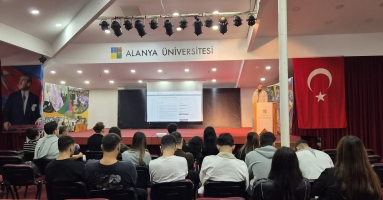
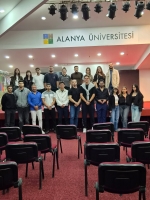
Within the scope of the 2026–2027 Academic Year, the Department of International Trade and Logistics held the Department Student Representative Election to ensure that students’ views, sug...
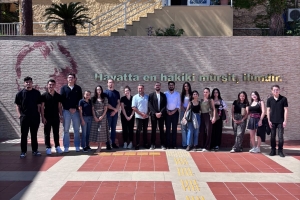
The orientation program organized for the first-year students of the Department of International Trade and Logistics within the scope of the 2026-2027 Academic Year has been successfully completed. ...

Alanya University organized an institutional assembly at the Hamdullah Emin Paşa Campus in anticipation of the upcoming academic term.
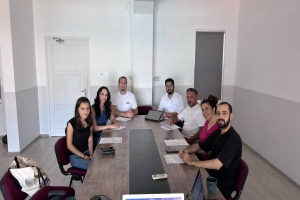
The first departmental meeting of the term was held by the Department of International Trade and Logistics to comprehensively plan the academic activities and structure the internal administrative pro...
There are no event available.
See All